Physical Address
304 North Cardinal St.
Dorchester Center, MA 02124
Physical Address
304 North Cardinal St.
Dorchester Center, MA 02124
Climate change is often framed as an innovation problem. The dominant response has been to mobilize venture capital, fund ambitious founders, and accelerate technologies intended to decarbonize the economy or increase resilience. This framing assumes that climate risk can be addressed primarily through growth, disruption, and market adoption.
Reinsurance operates under a fundamentally different logic.
Where venture capital approaches climate change as an opportunity, reinsurers encounter it as a constraint. They do not model climate risk as a future possibility or a technology roadmap. They experience it as a balance-sheet condition that must be priced, carried, or exited. That difference in exposure produces a difference in understanding, one that becomes more pronounced as climate volatility accelerates.
The difference is exit. Venture capital can abandon failed assumptions; reinsurers must continue carrying them.
One could argue that venture capital’s ability to fail fast and pivot rapidly produces a steeper learning curve. In many domains, that is true. Rapid iteration is an effective way to discover product–market fit, refine business models, and identify scalable opportunities. But climate risk does not reveal itself through iteration alone. Its most consequential signals emerge through accumulated loss, correlation, and constraint, conditions that cannot be fully observed from abandoned positions. Learning that depends on exit differs fundamentally from learning that depends on continued exposure to loss. Reinsurers do not learn because they iterate faster; they learn because they must continue holding risk after assumptions fail, forcing model error to become balance-sheet reality rather than a discarded hypothesis.
Venture capital is structured around upside. It tolerates failure because losses are capped at invested capital, while gains can be exponential. Climate risk, by contrast, is defined by downside. Reinsurers operate under the opposite payoff structure: upside is capped by premium income, while downside is open-ended relative to annual earnings and can accumulate rapidly when losses cluster. When a model fails, losses do not remain theoretical. They arrive as claims, with contractual settlement timelines and capital consequences. Reinsurers cannot pivot away from a bad outcome. They must absorb it.
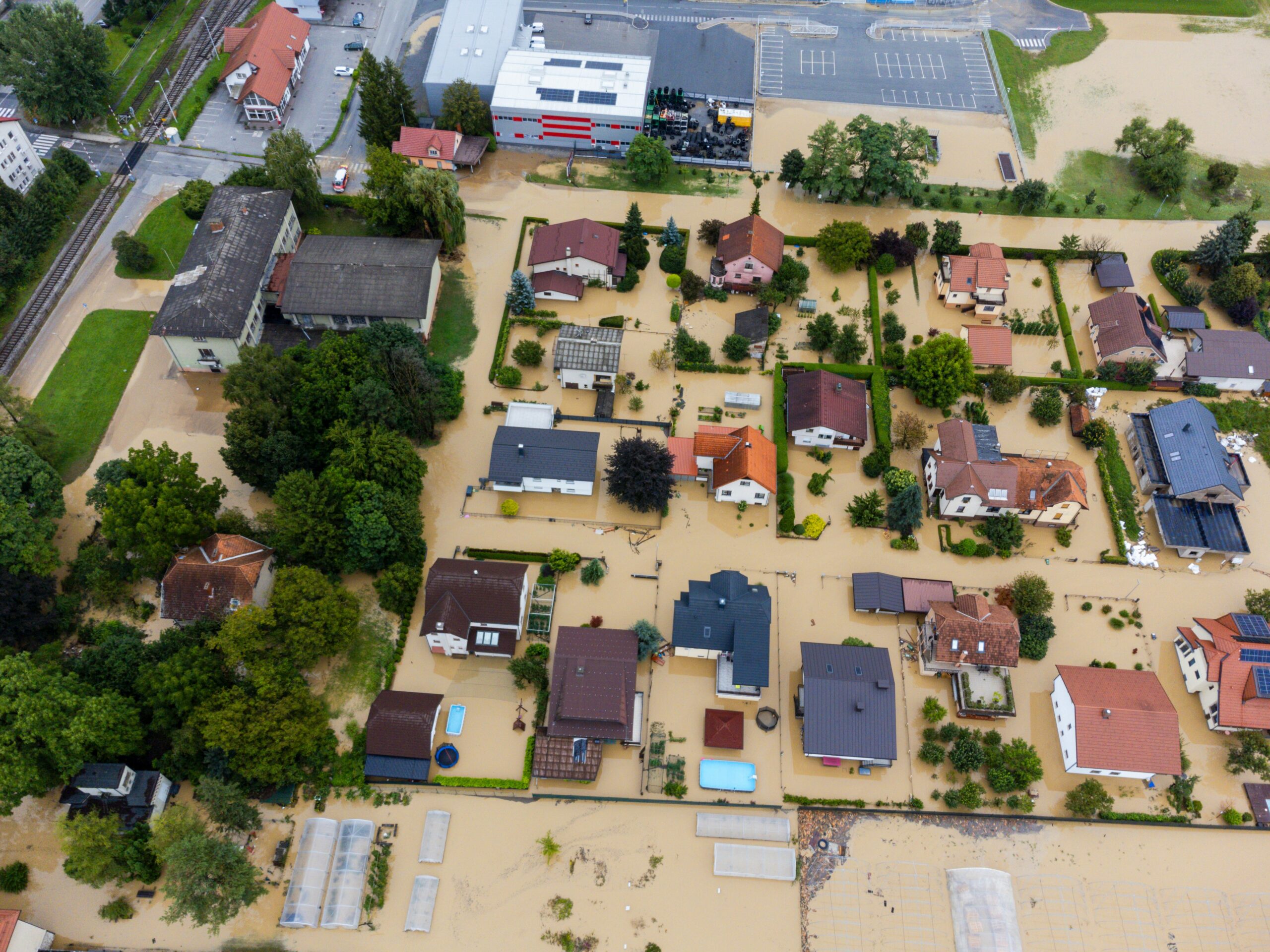
This structural exposure makes reinsurers acutely sensitive to physical reality. They are forced to confront correlation, tail risk, and compounding uncertainty in ways that growth-oriented capital is not. A wildfire season that invalidates prior assumptions does not represent a learning opportunity for a reinsurer. It represents a capital problem.
That distinction shapes behavior.
Reinsurers do not ask whether climate change is “priced in” at a macro level. They ask whether a specific portfolio remains survivable under revised assumptions. They do not debate whether models are perfect. They ask whether imperfect models are still sufficient to support exposure. When the answer is no, they reduce capacity or exit entirely.
This is why reinsurers have been among the earliest institutions to act on climate reality. Not rhetorically, but operationally. Capacity has tightened. Terms have hardened. Exclusions have expanded. Retrocession has thinned. These shifts did not require consensus or belief. They required arithmetic.
Venture capital, by contrast, remains largely insulated from direct climate downside. Its exposure is indirect and delayed. Losses from climate events do not immediately impair fund net asset values, trigger capital requirements, or force rapid repricing. As a result, climate risk can remain abstract: something to be addressed through innovation rather than something that constrains capital allocation today.
This difference explains why the two communities often talk past each other.
From a venture perspective, climate change represents an enormous market opportunity. From a reinsurance perspective, it represents a destabilizing force that undermines the assumptions required to hold risk at scale. One looks for scalable solutions. The other looks for survivable exposures. Neither perspective is irrational, but only one is forced to internalize downside in real time.
Reinsurers are also trained to think probabilistically rather than narratively. They do not ask which technology will “win.” They ask how loss distributions shift when hazard frequency increases, when tail severity expands, and when correlations rise across regions. In this framework, climate change is not a single risk factor. It is a regime change.
That regime change weakens the mechanics insurance depends on: diversification, independence of events, and temporal spacing of losses. When those properties erode, insurance does not fail dramatically. It becomes uneconomic quietly. Capital retreats. Capacity contracts. Risk migrates.
This process is already visible. Reinsurance markets harden not because of ideology or resistance to innovation, but because risk no longer behaves in ways that make it financeable under existing structures. Venture capital may continue to fund climate-adjacent solutions, but that activity does not reverse the withdrawal of underwriting capacity. It operates on a different axis.
The result is a widening gap between where climate risk accumulates and where capital is deployed.
Reinsurers sit at the center of that gap. They are the first to encounter the constraint when risk becomes untransferable. Venture capital encounters the same constraint later, if at all, often indirectly through downstream effects such as insurance availability, infrastructure bottlenecks, or public-sector absorption.
This does not mean venture capital is misguided, but that it is incomplete.
Climate reality is not only a question of innovation. It is a question of where risk can be held, for how long, and under what terms. Reinsurance markets answer those questions continuously because they must. Venture markets do not, because they are not designed to.
As climate volatility increases, the most important signals may not come from startups funded or capital raised, but from where reinsurance capacity contracts and why. Those contractions reveal where the system has reached its limits, where risk can no longer be transferred and must either be absorbed elsewhere or reduced at the source.
That is where the conversation shifts from innovation to architecture.
Understanding climate reality requires following risk, not narratives. Reinsurers do this by necessity. Venture capital has not yet been forced to. Bridging that gap will require financial structures capable of operating under constraint—structures that treat downside, duration, and probabilistic value as primary inputs rather than externalities. Efforts to develop such architectures, including those explored at ArcticaRisk.com, reflect a growing recognition that climate reality will not be resolved by growth logic alone, but by capital systems designed to hold and reduce risk over time.