Physical Address
304 North Cardinal St.
Dorchester Center, MA 02124
Physical Address
304 North Cardinal St.
Dorchester Center, MA 02124

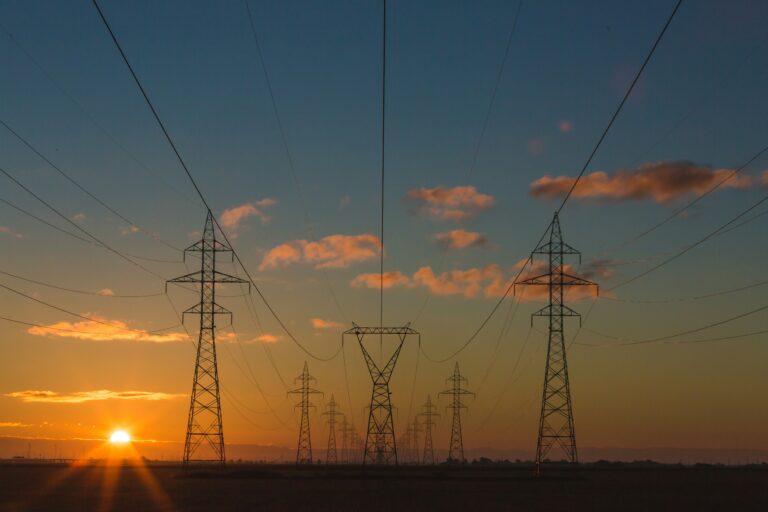
We tend to talk about climate risk as if it simply “increases.” More fires. More floods. Bigger storms. Higher losses. But risk does not just increase. It moves.
It migrates through financial systems, institutional structures, and public balance sheets. It is transferred, warehoused, repriced, externalized, and, when no one else will hold it, socialized. To understand what is happening in insurance markets today, it helps to stop thinking about risk as a static exposure and start thinking about it as a flow.
The private catastrophe risk stack is structured in layers. Primary insurers assume risk from policyholders. Reinsurers absorb risk from primary insurers. At the top sits retrocession: reinsurance for reinsurers. This layer absorbs tail risk: the extreme losses that exceed normal underwriting capacity. Over the past two decades, much of this exposure has been externalized to capital markets through Insurance-Linked Securities (ILS): catastrophe bonds, sidecars, collateralized re, and similar structures. ILS functioned as a pressure valve, allowing insurers, reinsurers, and retrocessionaires to externalize tail risk from balance sheets and into investor portfolios.
This is not accidental. The system was built to move risk. But climate change is breaking the assumptions that made that possible.
The underlying logic was elegant. Events were assumed to be weakly correlated. Losses were assumed to be bounded. Models were assumed to be stable. Diversification was assumed to work. These assumptions made catastrophe risk appear quantifiable, tranchable, and containable.
Climate change breaks all four.
Hazard events are increasingly correlated across regions. Loss severity is expanding beyond historical bounds. Model reliability degrades as climate dynamics accelerate, and diversification fails when systemic drivers synchronize risk. When these assumptions fail, the structure does not adjust smoothly. It destabilizes.
The failure sequence is already visible. Losses cluster. Triggers are breached more frequently. Capital becomes trapped in ILS structures as losses develop. Investor risk tolerance declines. Funds stop writing retrocession. Reinsurers pull back. Insurers lose underwriting capacity. And risk migrates into residual markets, public pools, and ultimately the state.
This is not a theory. It is already happening.
Structurally, the pattern should look familiar. In 2007, mortgage risk was pushed up the stack, warehoused in structured products, mis-modeled, suddenly repriced, and then liquidity evaporated. The problem was not just bad loans. It was architecture. The same failure mode is now emerging in catastrophe risk. Different asset class. Same structure.
Retrocessionaires and ILS together act as the shock absorbers of the climate risk system. They create the appearance that there is always somewhere for risk to go. Always more capacity, always another layer.
But shock absorbers wear out.
As climate volatility overwhelms this layer, the system confronts a constraint rather than a choice. Risk must either be absorbed by the public, or it must be reduced at the source. Transfer can function only while capacity exists. When it does not, reduction becomes unavoidable.
When private capital pulls back, risk does not disappear. It settles into FAIR plans, state pools, public balance sheets, emergency appropriations, and ultimately onto taxpayers. This migration is mechanical, not ideological. The state becomes the insurer of last resort not by design, but by default.
But public capacity is not infinite. Balance sheets harden. Fiscal space narrows. Political tolerance erodes. At a certain point, the system runs out of places to put risk.
This is the hinge point between risk trading and risk prevention. The system was built to price, transfer, and redistribute risk. It was not built to make risk smaller. That missing layer is now visible.
Climate disaster has an economic pathway. Climate risk reduction largely does not. That asymmetry is not accidental; it is a design choice. But design choices can be changed.
I am exploring what it would take to build financial architecture for risk reduction through ongoing work at Arctica Risk. You can learn more at ArcticaRisk.com.